Custom Storefront Sign Design: Best Practices for Business Branding
Storefront signs play a crucial role in establishing a business’s identity and attracting customers. They serve as the first point of contact between a business and potential clients, making their design and placement vital for effective branding. This article will explore the various types of storefront signs, their benefits, and best practices for design and installation. By understanding these elements, businesses can enhance their visibility and create a lasting impression on customers. We will also discuss the importance of professional installation and maintenance, as well as the materials that optimize signage effectiveness.
Key Types of Signs
Storefront signs come in various forms, each serving unique purposes and offering distinct advantages. Understanding the different types of signs can help businesses choose the right one for their branding needs.
Custom Indoor and Outdoor Signage
Custom indoor and outdoor signage is tailored to meet specific branding needs and functional requirements. These signs can be designed to reflect a business’s identity while providing essential information to customers. For instance, outdoor signs can attract attention from passersby, while indoor signs guide customers through the space, enhancing their overall experience.
Dimensional Signage
Dimensional signage adds a three-dimensional effect to a business’s branding, making it more visually appealing. This type of signage can attract customers by creating depth and interest, which helps to stand out in a crowded marketplace. Dimensional signs can be made from various materials, allowing for creative designs that align with a brand’s identity.
Illuminated Signs
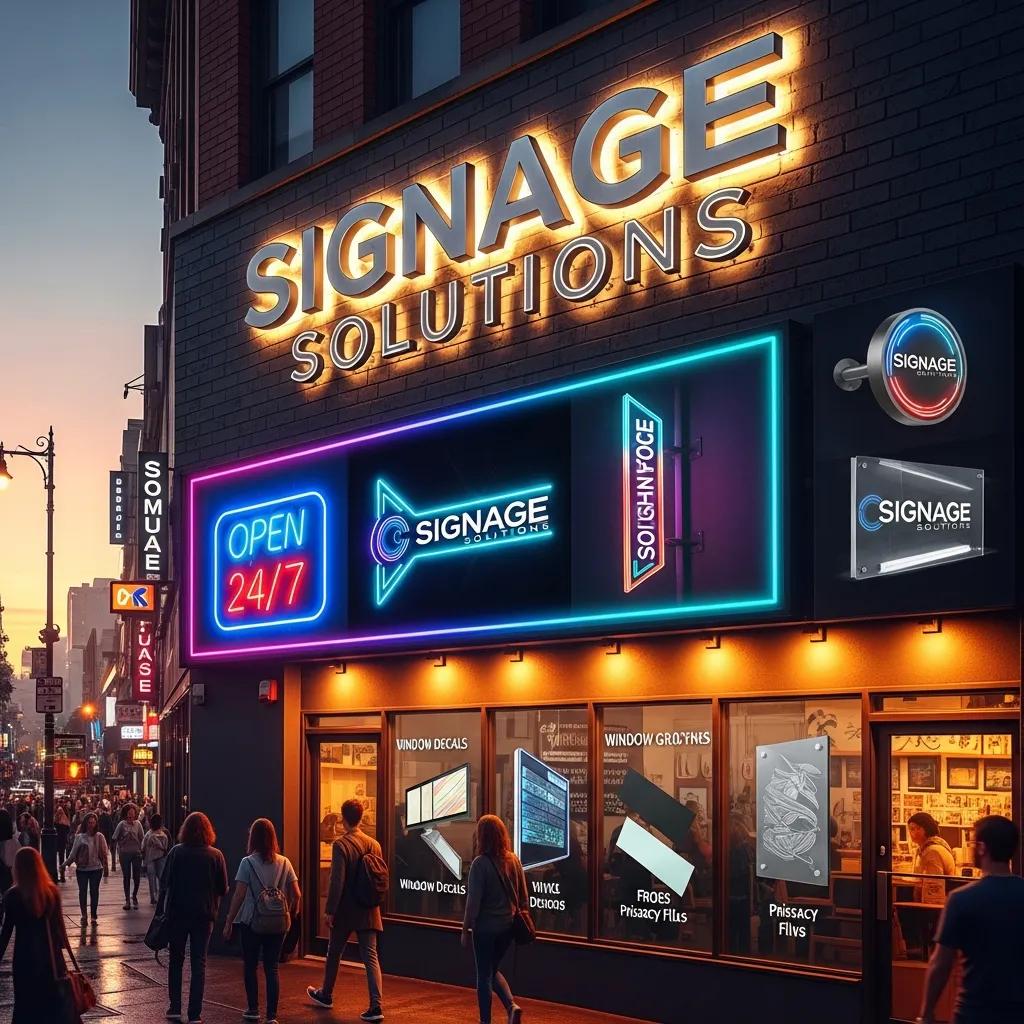
Illuminated signs are particularly effective for enhancing visibility at night. They not only attract attention but also improve safety by making the business easily identifiable in low-light conditions. These signs can be designed in various styles, including channel letters and backlit displays, to suit different branding needs.
Banners
Banners are versatile tools for promotions and events. They can be used to announce sales, special events, or new product launches. Their portability and ease of installation make them an excellent choice for businesses looking to create temporary signage that can be easily updated.
Vehicle Wraps
Vehicle wraps transform vehicles into mobile advertisements, increasing brand visibility wherever they go. This form of advertising is particularly effective for businesses that rely on transportation, as it allows them to reach a broader audience while on the move.
Window and Wall Graphics
Window and wall graphics enhance storefronts and interiors by providing visual appeal and reinforcing brand messaging. These graphics can be used to display promotions, showcase products, or simply enhance the aesthetic of a space, making them a valuable addition to any business’s signage strategy.
Benefits of Illuminated and Dimensional Signs

Illuminated and dimensional signs offer several advantages that can significantly impact a business’s visibility and branding.
- Visibility at Night: Illuminated signs ensure that a business remains visible even after dark, attracting customers who may not have noticed it during the day.
- Attention-Grabbing: The unique design of dimensional signs can capture the attention of potential customers, making them more likely to enter the store.
- Brand Recognition: Both illuminated and dimensional signs help reinforce brand identity, making it easier for customers to remember and recognize the business.
For businesses in the Atlanta area, High Stakes Creative specializes in custom storefront signs that enhance branding and visibility. Their expertise in creating effective signage solutions can help businesses stand out in a competitive market.
Understanding the deeper mechanisms, researchers have developed models to explain how signage functions as a comprehensive marketing communication tool, influencing customer responses.
Signage as a Marketing Communication Tool: Effects & Outcomes
Further advancement of the growing knowledge base in the emerging, cross-disciplinary field of signage should benefit from investigation intohowandwhycommunication effects of signs occur, as such insights could potentially inform evidence-based decision-making. To facilitate such research, the authors propose a conceptual model of signage as a marketing communication tool. Model components include objective and subjective traits of signs, characteristics and states of viewers, contextual variables, conscious and intuitive process mechanisms, and communication outcomes, including affective, cognitive, and behavioral responses to signs.
Signage as marketing communication: A conceptual model and research propositions, JJ Kellaris, 2007
Materials That Optimize Signage
The materials used in signage can significantly affect its durability and visual impact. Choosing the right materials is essential for creating effective storefront signs.
This table illustrates how different materials can influence the longevity and aesthetic appeal of signage. Businesses should consider these factors when selecting materials for their storefront signs.
Importance of Professional Installation and Maintenance

Professional installation and maintenance of storefront signs are critical for ensuring their effectiveness and longevity. Proper installation guarantees that signs are displayed correctly and safely, while regular maintenance helps to keep them looking their best.
- Correct Display and Safety: Professional installation ensures that signs are securely mounted and comply with local regulations, reducing the risk of accidents.
- Longevity of Signage: Regular maintenance, such as cleaning and repairs, can extend the life of a sign, ensuring it remains effective over time.
- Enhanced Visibility: Well-maintained signs are more likely to attract customers, as they convey a sense of professionalism and care.
High Stakes Creative offers professional installation and maintenance services for storefront signs, ensuring that businesses can focus on their operations while their signage remains in top condition.
What Are the Key Types of Custom Storefront Signs?
Understanding the key types of custom storefront signs is essential for businesses looking to enhance their branding and visibility. The main types include:
- Channel Letters: These are three-dimensional letters that can be illuminated, providing excellent visibility both day and night.
- Illuminated Signs: These signs use light to enhance visibility and attract attention, making them ideal for businesses that operate after dark.
- Dimensional Signs: These signs create a three-dimensional effect, adding depth and interest to a business’s branding.
How Do Channel Letter Signs Enhance Retail Visibility?
Channel letter signs enhance retail visibility by providing clear, illuminated branding that can be seen from a distance. Their customization options allow businesses to choose colors, fonts, and sizes that align with their brand identity, making them a popular choice for storefronts.
What Are the Benefits of Illuminated and Dimensional Signs?
Illuminated and dimensional signs offer several key benefits that can enhance a business’s branding and visibility. These include:
- Visibility at Night: Illuminated signs ensure that businesses remain visible after dark, attracting customers who may not have noticed them during the day.
- Attention-Grabbing: The unique design of dimensional signs can capture the attention of potential customers, making them more likely to enter the store.
- Brand Identity Reinforcement: Both illuminated and dimensional signs help reinforce brand identity, making it easier for customers to remember and recognize the business.
Which Materials and Design Elements Optimize Storefront Signage?
When designing storefront signage, several materials and design elements can optimize effectiveness. Key considerations include:
- Color Schemes: Choosing colors that align with the brand can enhance recognition and appeal.
- Typography: Clear, readable fonts are essential for ensuring that messages are easily understood.
- Layout Considerations: A well-organized layout can guide customers’ attention to key information.
What Outdoor Sign Materials Offer Durability and Visual Impact?
Outdoor signs must withstand various weather conditions while maintaining visual appeal. The following materials are commonly used for outdoor signage:
- Aluminum: Known for its durability and resistance to rust, aluminum is an excellent choice for outdoor signs.
- Acrylic: This material offers good visual impact and is lightweight, making it easy to install.
- PVC: While less durable, PVC can be a cost-effective option for temporary signage.
How Do Design Best Practices Strengthen Brand Consistency?
Implementing design best practices is crucial for strengthening brand consistency across all signage. Key practices include:
- Unified Visual Identity: Maintaining a consistent look and feel across all signs helps reinforce brand recognition.
- Clarity and Readability: Ensuring that signage is easy to read enhances customer understanding and engagement.
- Material Selection: Choosing high-quality materials that reflect the brand’s values can enhance overall perception.
Indeed, academic research further emphasizes how the form, materials, and visual elements of storefront signage are integral to a neighborhood’s unique identity.
Storefront Signage: Form, Materials & Visual Identity
Signs contribute significantly to the visual identity of neighborhoods, often representing the interplay of the collective social, political, cultural and economic values of the people who live and work there. On-premise signs displayed on building facades and storefronts in the neighborhood business district of three distinct neighborhoods in Cincinnati, OH are examined to document the typographic styles and form (material, size and scale, color, etc.) of the signs.
Signage form and character: A window to neighborhood visual identity, MN Rahman, 2020
How Is Professional Installation and Maintenance Critical for Storefront Signs?
Professional installation and maintenance are essential for ensuring that storefront signs remain effective and safe. Key reasons include:
- Correct Display and Safety: Professional installation ensures that signs are securely mounted and comply with local regulations.
- Longevity of Signage: Regular maintenance helps to keep signs looking their best and extends their lifespan.
- Cohesive Brand Experience: Well-maintained signs contribute to a positive customer experience, reinforcing the brand’s image.
What Are the Best Practices for Sign Installation in Atlanta?
When installing signs in Atlanta, businesses should follow best practices to ensure compliance and effectiveness. Key practices include:
- Professional Installation: Hiring experienced professionals ensures that signs are installed correctly and safely.
- Material Selection: Choosing materials that can withstand local weather conditions is crucial for durability.
- Timelines: Planning installation timelines to avoid peak business hours can minimize disruptions.
How Does Regular Maintenance Prolong Sign Effectiveness?
Regular maintenance is vital for prolonging the effectiveness of storefront signs. Key maintenance practices include:
- Routine Cleaning: Keeping signs clean ensures they remain visually appealing and legible.
- Prompt Repairs: Addressing any damage quickly can prevent further deterioration and maintain the sign’s effectiveness.
- Material Considerations: Understanding the specific care requirements for different materials can enhance longevity.
What Local Regulations and Permits Affect Storefront Signage in Atlanta?
Businesses in Atlanta must be aware of local regulations and permits that affect storefront signage. Key considerations include:
- Permits Required: Certain types of signage may require permits from local authorities before installation.
- Compliance Standards: Adhering to local ordinances regarding size, placement, and lighting is essential for legal compliance.
Which Permits Are Required for Retail Sign Installation?
Retail sign installation in Atlanta may require various permits, depending on the type and size of the sign. Businesses should consult local regulations to ensure compliance and avoid potential fines.
How Do Compliance Standards Influence Sign Design Choices?
Compliance standards can significantly influence sign design choices, dictating aspects such as size, materials, and illumination. Understanding these regulations is crucial for businesses to create effective and compliant signage.