Sign Permits in Metro Atlanta: What Businesses Need to Know
By Matt Matthews, Owner4 min read
Most permanent exterior business signs in metro Atlanta need a sign permit from the city or county where the property sits, and many interior signs do not. Each jurisdiction has its own sign ordinance, application and review time, so the first step is confirming who has authority over the address: a city such as Atlanta, Kennesaw or Marietta, or unincorporated Cobb, Fulton or another county. Landlord, property manager and HOA approvals sit on top of the permit, not instead of it.

At a glance
- Usually need a permit: building and wall signs, monument and pylon signs, projecting signs, illuminated signs.
- Often no permit: interior lobby signs, office door and suite signs, window graphics within the allowed area (check locally).
- Who issues it: the city if the property is inside city limits, otherwise the county.
- On top of the permit: landlord or HOA sign criteria, and an electrical permit where the sign is lit.
- Plan for it: drawings and approvals come before fabrication, so permits belong at the start of the schedule.
Which signs need a permit?
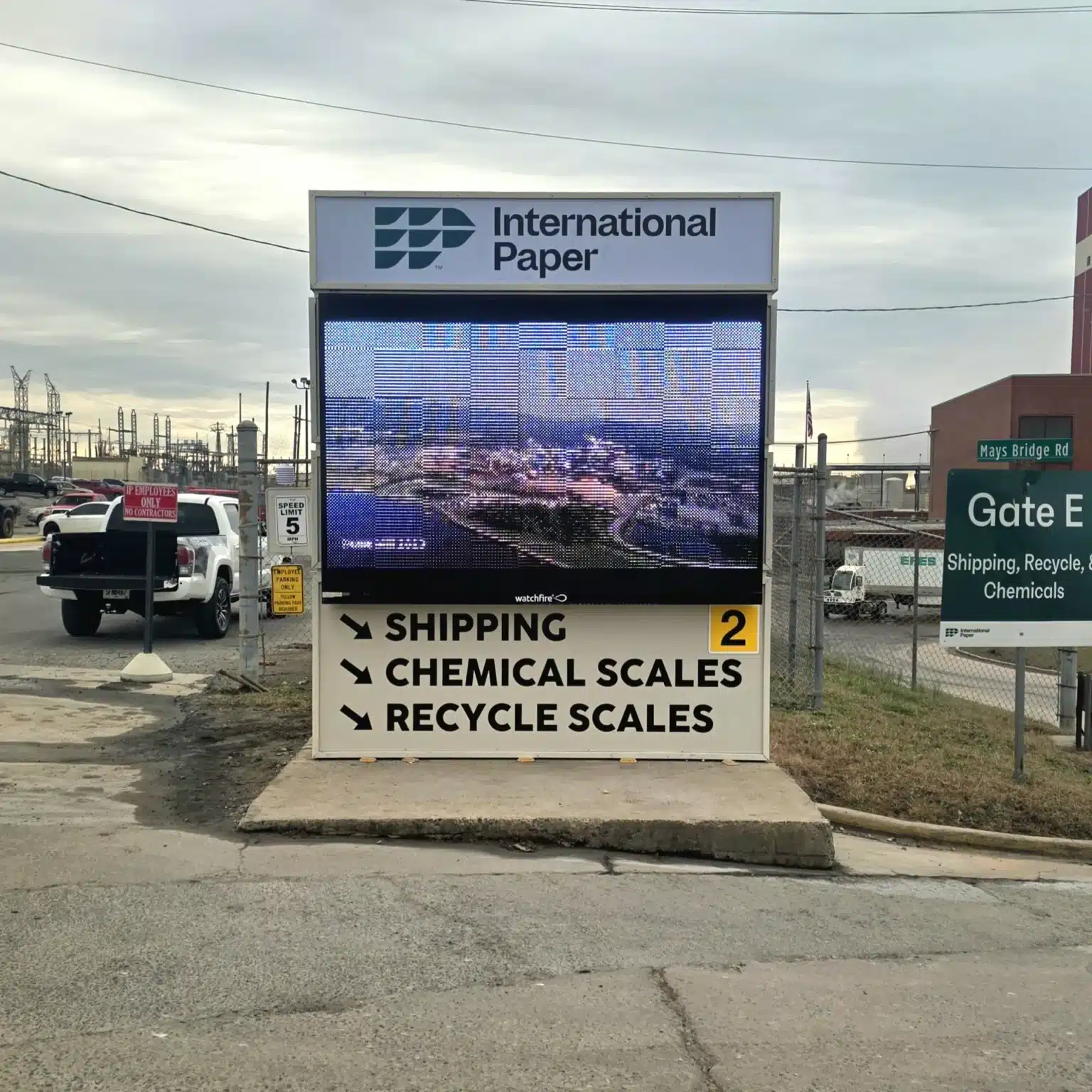
Exterior signs that are attached to a building or stand on their own almost always do: wall signs, channel letters, monuments, pylons and projecting blade signs. Electrical signs bring an extra review. Temporary banners and window signs are usually regulated by size and duration. Interior signs such as reception logos, room signs and wayfinding are generally handled through the building’s own approvals, though new interior construction can fall under a building permit. When in doubt, call the planning or zoning office for the address.
What does a sign permit application ask for?
Applications vary, but they ask for the same core facts. The City of Atlanta’s sign permit application, filed with the Office of Buildings, Zoning Division, is a good example. It asks for scaled street-front elevations and sign renderings, a site plan for freestanding signs, the sign’s size, height and mounting height, how the sign is secured, a structural plan where it applies, UL numbers for internally lit signs, and an affidavit that the property owner has authorized the work (see the City of Atlanta sign permit application). Expect a similar list in Cobb County and the cities around it.
- Scaled drawings of the sign and the building elevation it goes on.
- A site plan showing setbacks for monument and pylon signs.
- Sign area, height and the total sign area already on the building.
- Structural and mounting details, and electrical details for lit signs.
- Owner or landlord authorization, and the sign contractor’s information.
How do landlord and HOA rules fit in?
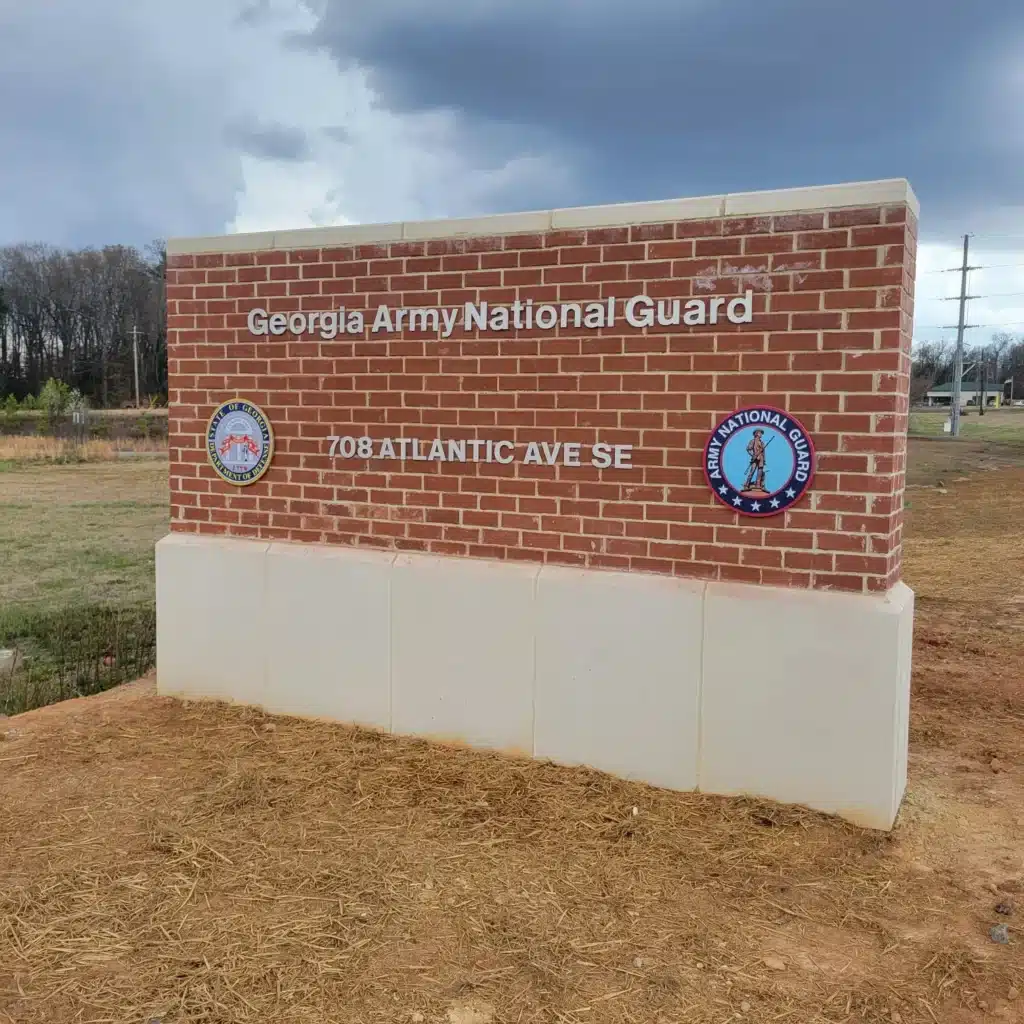
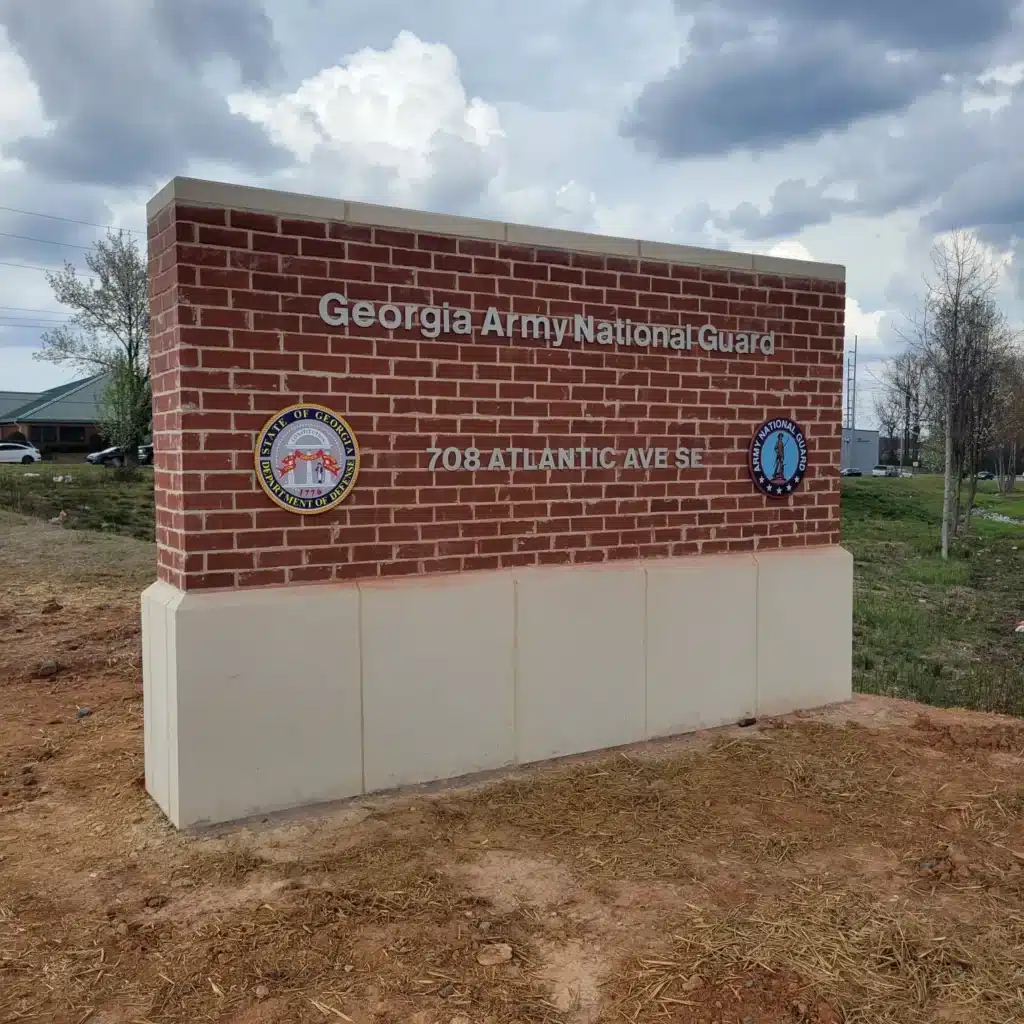
Office parks, shopping centers and mixed-use districts usually have sign criteria in the lease: allowed sizes, colors, lighting, letter styles and locations. Many require the landlord’s sign-off on drawings before a permit application is filed. Planned communities and historic or overlay districts can add another layer of review. Ask your property manager for the sign criteria at the start, because it shapes the design.
How long do permits take?
It depends on the jurisdiction, the sign type and whether the drawings are complete. A complete, code-compliant package moves fastest; missing details, a sign over the allowed area or a needed variance add time. Build the review into the schedule so a grand opening or move-in date does not hinge on a permit that has not been filed yet.
What slows a sign permit down?
- A sign larger than the ordinance allows for that frontage, which can require a variance.
- Missing owner or landlord authorization.
- No site plan for a monument sign, or a sign inside a required setback.
- Lighting that has not been documented for an illuminated sign.

Do window graphics and banners need a permit?
Many ordinances limit window signs to a share of the glass area and treat banners as temporary signs with time limits, rather than requiring a full permit for each one. The rules differ from city to city, so check the ordinance for the address before covering a storefront or putting up a grand-opening banner. Interior glass graphics such as conference room frost and privacy film are not exterior signs.
What is a sign variance?
A variance is permission to depart from the sign ordinance, for example a sign larger or taller than the rules allow for that frontage. It goes through a separate review, often with a public hearing, and takes longer than a standard permit. When a design needs one, it is usually worth asking whether a code-compliant version would do the job first.
Who files the permit?
Usually the sign contractor, with the owner’s authorization. On multi-location projects we file sign permits with each local jurisdiction and track them alongside the survey, design and install schedule, so you have one point of contact for every location. For a single building, we confirm the jurisdiction and the sign rules during the site survey, before design is final.
What should you have ready?
- The property address and the landlord or property manager’s contact.
- Any sign criteria from your lease or the property’s HOA.
- Your logo files and the sign locations you have in mind.
- Your target date, so permits can be planned backward from it.
Planning exterior or monument signs?
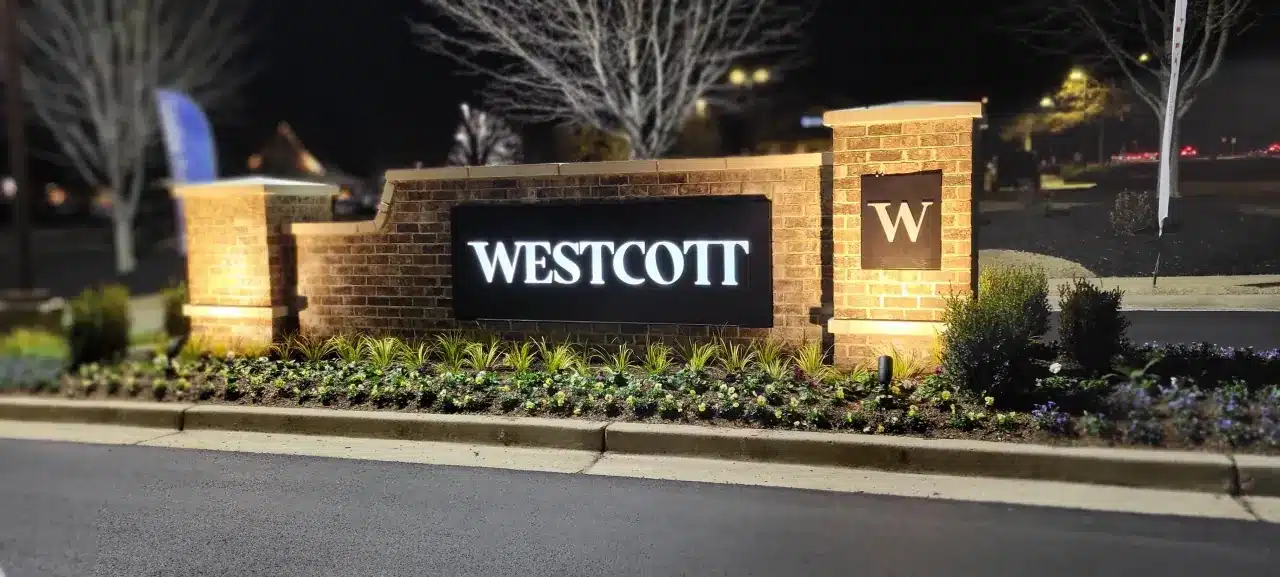
See monument signs, architectural signage and multi-location rollouts. Ready to plan yours? Start a project or call (678) 861-7446.
Keep reading
Before Install Day: How to Prepare Your Office or Site for Sign and Graphics Installation
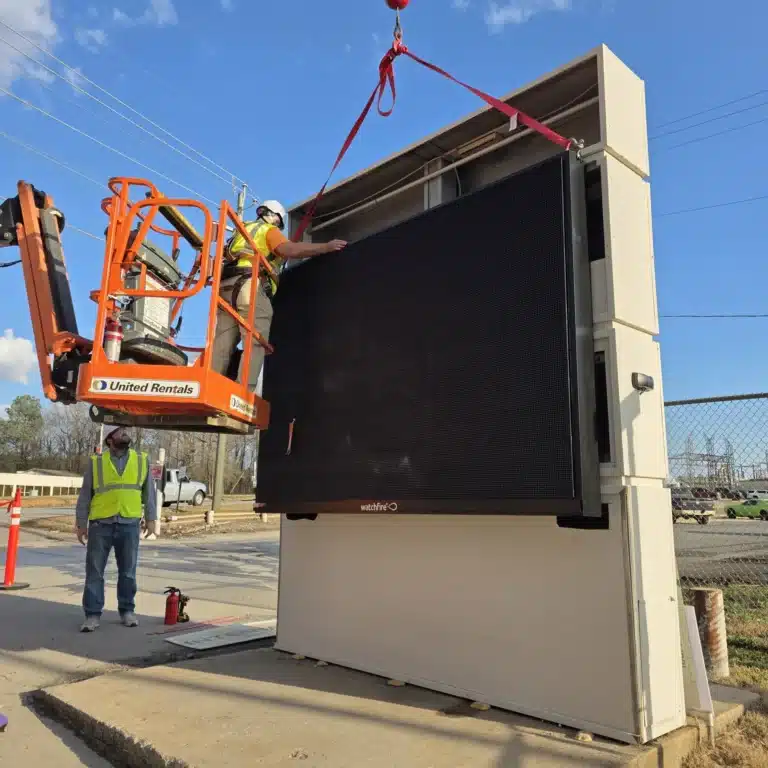
What happens before signs and office graphics go up: survey, wall and glass prep, old graphics removal, power and access, plus a facility manager checklist.
Read the article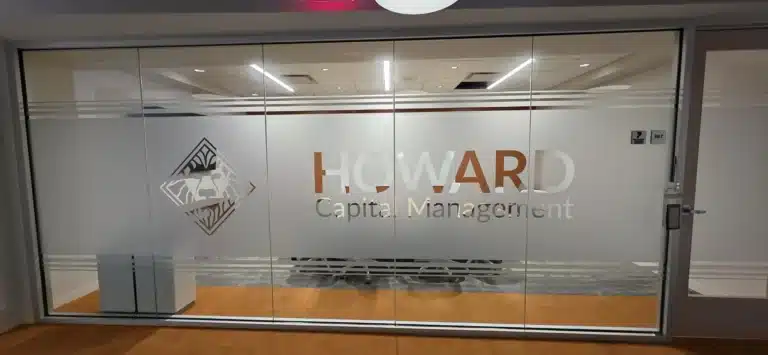
Rebrand Sign Checklist: Updating Every Sign, Wall and Vehicle Without Missing One
A step-by-step checklist for replacing signs, office graphics and fleet graphics in a rebrand, merger or acquisition, from inventory to final walkthrough.
Read the article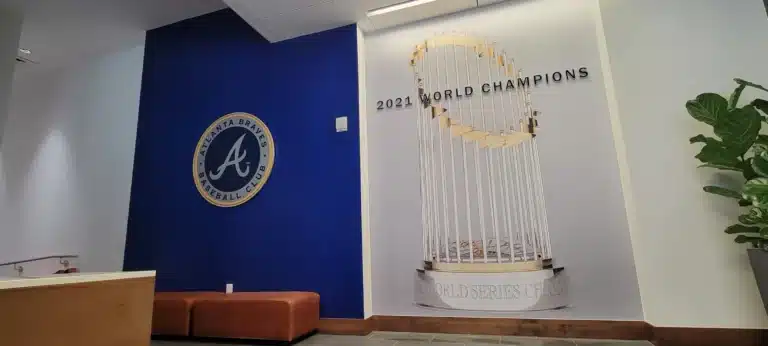
How Lobby Logos and Office Signs Are Mounted: Studs, Standoffs, Tape and Cleats
Stud mounts, standoffs, VHB tape, cleats and rails: how lobby logos and office signs are mounted, and how to pick the right method for your wall.
Read the articlePlanning a project like this?
Send the floor plans, brand guide and the date you are working toward. We will come back with a scope, a schedule and one point of contact.
2000 Cobb International Blvd NW, Suite E, Kennesaw, GA 30152
(678) 861-7446
info@highstakescreative.com
Monday to Friday, 9am to 5pm